Los Nidos de David
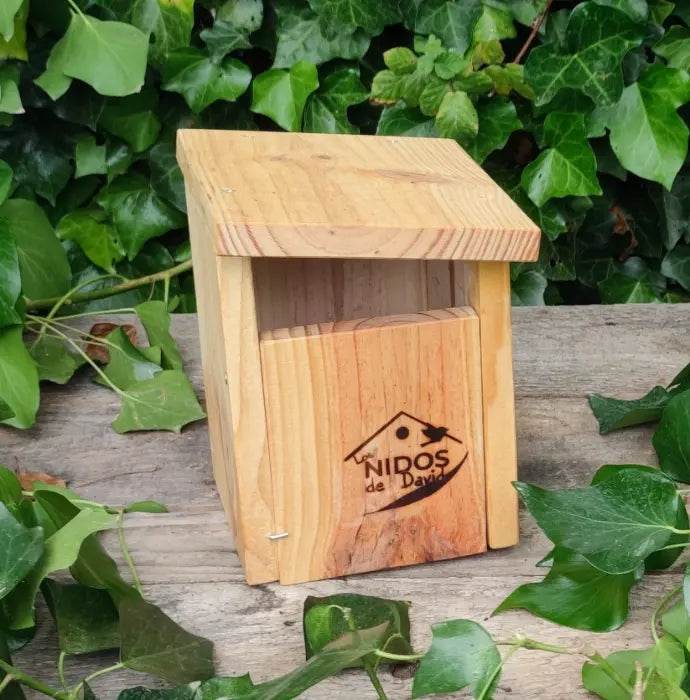
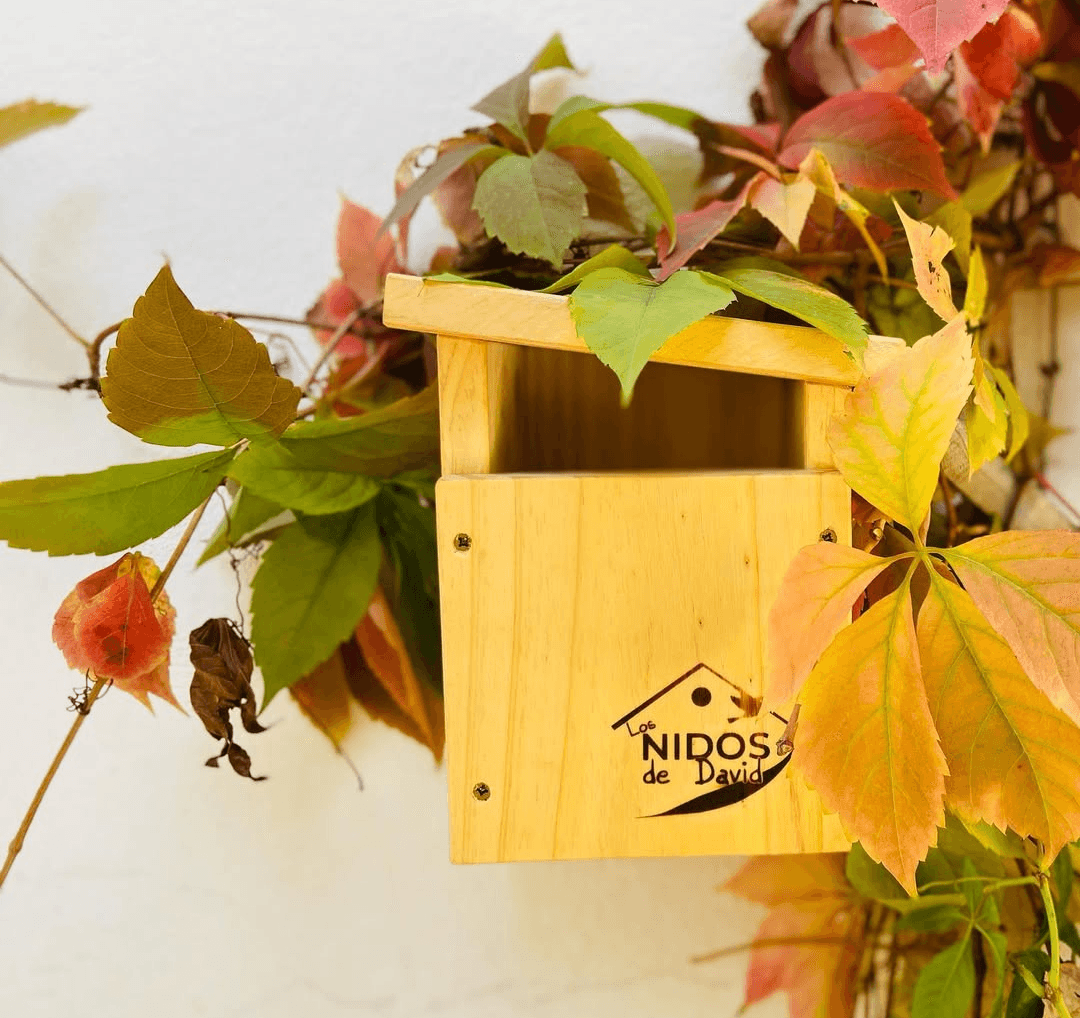
Basic open-fronted nest box for robins and other small birds
Basic open-fronted nest box for robins and other small birds
Couldn't load pickup availability
Open-front nest boxes are designed for bird species that do not use enclosed cavities, such as the robin or redstart.
This type of shelter mimics more open natural spaces, allowing these birds to find a suitable place to nest in gardens, orchards, and natural environments.
It's not a conventional nest box: it's a way to bring wildlife into your surroundings simply and respectfully.
Why choose an open-front nest box?
Many birds do not nest in holes or enclosed cavities. They prefer more open spaces, protected but accessible, such as crevices in walls, roots, or natural structures. Open-front nest boxes replicate these conditions.
This allows for:
- Encouraging species less common in traditional nest boxes
- Increasing bird diversity in the environment
- Creating more natural and integrated shelters
It's a different way to promote biodiversity.
Which birds use this type of nest box
This model is especially suitable for species such as:
- Robin
- Redstart
- White Wagtail
- Flycatcher
These birds seek more open and discreet locations, so a closed box is not attractive to them.
If you want to attract these types of birds, this is the right format.
A natural refuge for your garden or orchard
Installing an open nest box not only helps birds. It also transforms your space:
- Increases biodiversity
- Promotes the presence of local wildlife
- Allows observation of birds' natural behavior
It is ideal for those who want to enjoy nature up close, without excessive intervention.
Design intended to blend into the environment
Unlike other more enclosed models, this box is designed to offer:
- Protection from rain and sun
- Open and natural access
- A safe but not completely enclosed space
It is made of untreated natural wood, which allows for proper breathability and better integration into the environment.
It does not seek to stand out, but to be part of the landscape.
Where to place an open-front nest box
Location is especially important for this type of box. To increase the chances of occupation:
- Place at a low height (1–2 meters)
- Locate in quiet and sheltered areas
- Avoid direct exposure to intense sun
- Position near vegetation, walls, or structures
Unlike closed boxes, these need greater natural protection.
How to get better results
Birds that use this type of shelter are more sensitive to the environment. Therefore, in addition to installing the box:
- Avoid high-traffic areas
- Maintain some naturalness in the garden
- Avoid using pesticides
- Offer nearby vegetative cover
The more natural the environment, the greater your chances of success.
Recommendation
In large spaces or areas with different zones, installing several open nest boxes can increase the chances of occupation, as each bird can choose the location that best suits its preferences.
Handcrafted production
Each box is handcrafted, using natural wood and taking care of every detail to ensure its durability and functionality.
It is not a decorative product, but a shelter designed to be used in real conditions.
More than a nest box
This is not just a shelter. It is a way to reclaim small spaces for the wildlife around us and encourage the presence of species that are finding fewer places to nest.
And when the first robin appears... everything changes.
Characteristics
Characteristics
- Made with pine wood from sustainably managed forests with FSC or PEFC certification.
- We use 18mm thick wooden boards, which gives it great strength and durability.
- The pieces are joined together using lag screws instead of nails, achieving greater strength and durability.
- Exterior varnished with a coat of raw linseed oil (no drying agents).
- It has a front opening for easy access inspection and cleaning of the box.
- On the back of the box there are 2 holes to put 2 eyebolts (also included) to be able to hang it easily.
- At the base it has a small drainage hole to prevent water accumulation in case of rain.
Technical sheet
Technical sheet
- Width: 22 cm
- Height: 16.5 cm
- Depth: 18.5 cm
- Weight: 1.2 Kg
Target species
Target species
- European Robin (Erithacus rubecula)
- Black redstart (Phoenicurus ochruros)
- White Wagtail (Motacilla alba)
- Grey Wagtail (Motacilla cinerea)
- Common Redstart (Phoenicurus phoenicurus)
- Stonechat (Saxicola rubicola)
- Common nightingale (Luscinia megarhynchos)
- Bastard Nightingale (Cettia cetti)
- Blackcap (Sylvia atricapilla)
- Common Chiffchaff (Phylloscopus collybita)
Share